
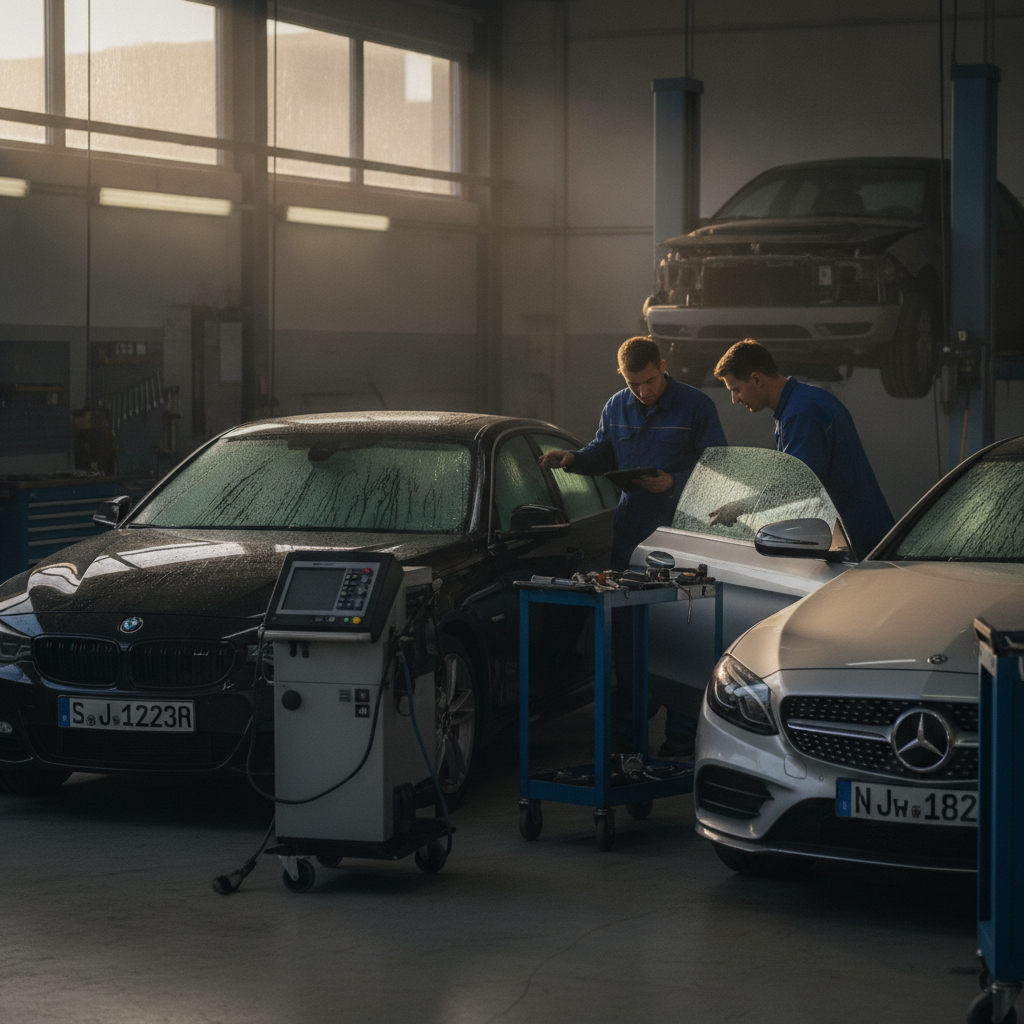
Why Is My Mercedes-Benz or BMW’s Windshield Fogging Up from the Inside? What Roswell Owners Should Know
If your BMW or Mercedes-Benz windshield keeps fogging up from the inside — and running the defroster on full blast barely makes a dent — you’re dealing with more than Georgia humidity. Persistent interior fogging in a European vehicle is almost always a symptom of a mechanical or ventilation issue inside the car. For Roswell owners, especially during the long humid stretch from late spring through early fall, these symptoms tend to get worse before they get better. The good news is that the problem is diagnosable and fixable. The bad news is that most general repair shops aren’t equipped to track it down correctly in a BMW or Mercedes — and most competitor shops in the area don’t discuss it at all.
It’s Not Just the Weather — Here’s What’s Actually Happening
A fogged windshield from the outside is weather. A fogged windshield from the inside, especially when the car has been parked or during humid mornings, points to moisture trapped in the cabin. On a BMW or Mercedes-Benz, there are three primary sources of that moisture:
- A leaking or weeping heater core — The heater core is a small radiator tucked behind your dashboard that circulates hot coolant to warm the interior. When it starts to fail — even very slowly — it releases a fine mist of coolant into the cabin. You may smell something faintly sweet along with the fogging. This is one of the more serious causes and should be addressed promptly.
- A clogged HVAC condensate drain line — Your air conditioning system pulls moisture out of the air and routes it outside through a drain tube. When that drain clogs — which happens frequently in vehicles driven in Atlanta metro traffic with the A/C cycling constantly — water backs up into the cabin floor or HVAC housing. That moisture then evaporates onto your windshield every time you turn on the heat or fan.
- A saturated or failed cabin air filter — BMW and Mercedes both use multi-layer cabin air filters that trap particulates, pollen, and moisture. When these go too long without replacement, they can become a reservoir for trapped humidity and even mold spores, which get circulated back through the vents and straight onto your glass.
There’s also the possibility of a failed door seal or sunroof drain letting water into the footwells — another common issue in European vehicles that gets worse over time and is frequently misdiagnosed as an HVAC problem until someone actually inspects the carpet.
Why This Problem Is Worse in the Roswell and North Fulton Area
Georgia’s climate is genuinely hard on cabin systems. The combination of high humidity, summer heat that pushes interior temperatures well above 130°F when parked, and frequent short stop-and-go trips along GA-400 creates conditions where HVAC systems cycle hard without ever fully drying out. Vehicles that sit outdoors — even in driveways in Alpharetta, Sandy Springs, or Johns Creek — absorb more ambient moisture than owners typically expect.
That heat also accelerates heater core degradation. BMW coolant systems in particular run at higher pressures than most domestic vehicles, and a heater core that might last 150,000 miles in a moderate climate can begin weeping as early as 90,000 miles in the Southeast. If you’ve noticed a film building up on the inside of your windshield that’s oily or difficult to wipe clean — that’s almost always coolant residue from a heater core, not condensation.
What Most General Shops Get Wrong About This Diagnosis
Here’s where it matters that you’re bringing a BMW or Mercedes to someone who actually knows the platform. A common mistake at general repair shops is to replace the cabin air filter, clear any obvious drain blockage, and call it done. On a BMW 5 Series, 7 Series, or a Mercedes E-Class or S-Class, the HVAC architecture is significantly more complex. Many of these vehicles have separate climate zones, multiple recirculation sensors, and software-controlled blend doors. A fault in one of those components can cause the system to pull humid outside air even when it shouldn’t — and that won’t show up without factory-level diagnostic tools and the knowledge to interpret what you’re seeing.
Similarly, identifying a heater core leak early — before it saturates insulation, damages the blower motor, or creates a persistent mold issue — requires more than a visual inspection. At Solo Motorsports Roswell, factory-trained technicians use pressure testing and OEM diagnostic software to distinguish between a minor weep and a core that’s about to fail completely. The difference in repair cost between catching it early and waiting until coolant is pooling in the footwell is significant.
The Mold Problem Nobody Wants to Talk About
This is the angle that almost no local shop addresses directly, and it’s a real one. When moisture accumulates in a European vehicle’s HVAC housing — whether from a clogged drain, a slow heater core leak, or a failed cabin filter — mold colonizes the evaporator core and foam insulation behind the dash. At that point, you’re not just dealing with a fogged windshield. You have a vehicle that smells musty when you turn on the heat or A/C, potentially circulating spores throughout the cabin.
Treating this correctly means more than spraying a disinfectant into the vents. It means physically accessing the evaporator housing, cleaning or replacing the affected components, and addressing the moisture source so it doesn’t return. On a Mercedes GLE or BMW X5, that’s a job that requires removing significant interior trim and understanding how the vehicle’s HVAC system is laid out from the factory. Done correctly, the result is a cabin that smells clean and glass that clears in seconds. Done halfway, the mold returns within a few weeks.
Warning Signs You Shouldn’t Ignore
If you’re experiencing interior fogging, pay attention to whether any of these are also present:
- A sweet or slightly chemical smell from the vents — likely heater core coolant
- Oily film on the inside of the windshield that doesn’t wipe off cleanly with glass cleaner
- Wet carpet or moisture under the floor mats — drain backup or door seal failure
- Musty odor when the fan first turns on, especially after the car has been parked
- Coolant level that drops slowly over time with no visible external leak
Any one of these in combination with windshield fogging warrants a proper diagnostic, not a wait-and-see approach. European cooling and HVAC systems are engineered to tight tolerances, and small leaks inside a pressurized system tend to progress. A multi-point inspection that includes the cooling system and cabin air components can identify these issues before they become expensive ones.
Frequently Asked Questions
Is interior windshield fogging a safety issue?
Yes. A windshield that won’t clear quickly is a visibility hazard, especially during early morning commutes and rainy days. Beyond visibility, a coolant leak inside the cabin can eventually compromise the defroster system, blower motor, and electronic components behind the dashboard.
How do I know if it’s a heater core leak versus just condensation?
Normal condensation clears within a minute or two of running the defroster. A heater core leak typically leaves an oily or greasy film on the glass, produces a sweet smell, and may cause the windshield to re-fog quickly. If your coolant reservoir level drops gradually with no visible external leak, that’s another strong indicator.
How often should the cabin air filter be replaced on a BMW or Mercedes?
BMW recommends replacing the microfilter (cabin air filter) every 15,000 to 20,000 miles, or annually. Mercedes follows a similar interval. In Georgia’s pollen-heavy spring and humid summer, staying at the shorter end of that interval is worth it — a saturated filter actively contributes to interior moisture and odor problems.
Can I fix a clogged HVAC drain line myself?
Sometimes the drain line can be cleared with compressed air if you can locate the outlet underneath the vehicle. On many BMW and Mercedes models, however, the drain access is buried under trim panels or the firewall, and improper attempts to clear it can push debris further into the housing. A shop visit is usually the safer and faster option.
Does Solo Motorsports Roswell service Mercedes and BMW HVAC and cooling systems?
Yes. The team at Solo Motorsports Roswell handles full heater core diagnosis and replacement, HVAC drain service, cabin air filter replacement, evaporator cleaning, and related cooling system work on BMW, Mercedes-Benz, and all European makes. Factory-level diagnostic tools are used to identify the root cause before any repair work begins.
Get Your BMW or Mercedes Properly Diagnosed in Roswell
Interior windshield fogging in a European vehicle is a solvable problem — but only if the right cause is identified first. Whether you’re driving a BMW 3 Series in Alpharetta, a Mercedes S-Class in Sandy Springs, or an AMG in Johns Creek, the technicians at Solo Motorsports Roswell have the training, tools, and experience to get to the root of it without guessing. You shouldn’t have to drive to a dealership and pay dealership prices to get a proper answer.
Contact Solo Motorsports Roswell to schedule a diagnostic appointment. Same-day and next-day appointments are often available, and every repair is backed by a warranty on parts and labor.